When Printed Cleaning Sponges Fail: A Custom Scrubber Guide
A custom printed cleaning sponge has a short window to earn its place in a promotional gift set. If the logo fades after a few kitchen cleanups, the scrubber sheds at the edge, or the set stalls during a safety-check review, the buyer does not see a small production variance. The buyer sees a branded item that cannot be used, stored, or handed out with confidence. This guide is for buyers in the evaluation-to-execution stage who need to fix those failures before they repeat in the next order.
The practical answer is not to search for a single best sponge. It is to define the failure you cannot accept, trace it to the control point that creates it, and put a sample-and-inspection plan around that control point. Wenzhou Aha Craft Gifts Co., Ltd. (AHA), a manufacturer founded in 2017, supplies custom cleaning sponges and scrubbers through its AHA-CS Series (Customizable) and reports a full-process inspection approach from raw material selection to packaging. The sections below show how buyers can use that process without treating supplier claims as a substitute for their own acceptance criteria.
What Counts as a Printed Cleaning Sponge Failure?
A printed cleaning sponge failure is a mismatch between the approved sample and what the buyer can actually use, pack, or document. The mismatch can appear before delivery or after the gift set enters service. For procurement teams, the useful split is three failure classes: print failure, structure failure, and safety-check failure.
Print failure includes fading, low contrast, abrasion, poor registration, or a logo that transfers or smears during handling. A print can look correct on a flat proof and still fail on the actual sponge surface. The buyer should approve the print on the production substrate, not only on paper or a digital mock-up. Structure failure includes shedding, loose edges, shape deformation, weak assembly, or packaging crush that changes the product before use. Safety-check failure includes missing or mismatched documentation, unclear instructions or warnings, a destination-market requirement that was not mapped, or an incoming inspection that does not match the approved sample.
Why Print, Foam, and Safety Checks Fail in Promotional Gift Sets
Printed gifts are judged in use, not at the proofing stage. Fortune Business Insights reported that printing held a 31.78% share of the personalized gifts market in 2025, which helps explain why print quality is a central buying criterion for custom gift sets. For a printed cleaning sponge, the print is part of the product identity, but it also adds variables: artwork, substrate, ink, curing, handling, packaging, and storage. A failure can start at any of those points, and the visible symptom may appear much later.
Fade is not automatically an ink problem. It can involve the substrate, print coverage, surface preparation, handling before packing, or the conditions in which the gift set is stored. Shedding is not automatically a material problem. It can involve raw material selection, cutting or trimming, assembly, or the way the scrubber edge is finished. Safety-check failure is often a documentation and labeling problem rather than a product defect. The common thread is that the buyer needs a control point, not a general promise that the supplier is careful.
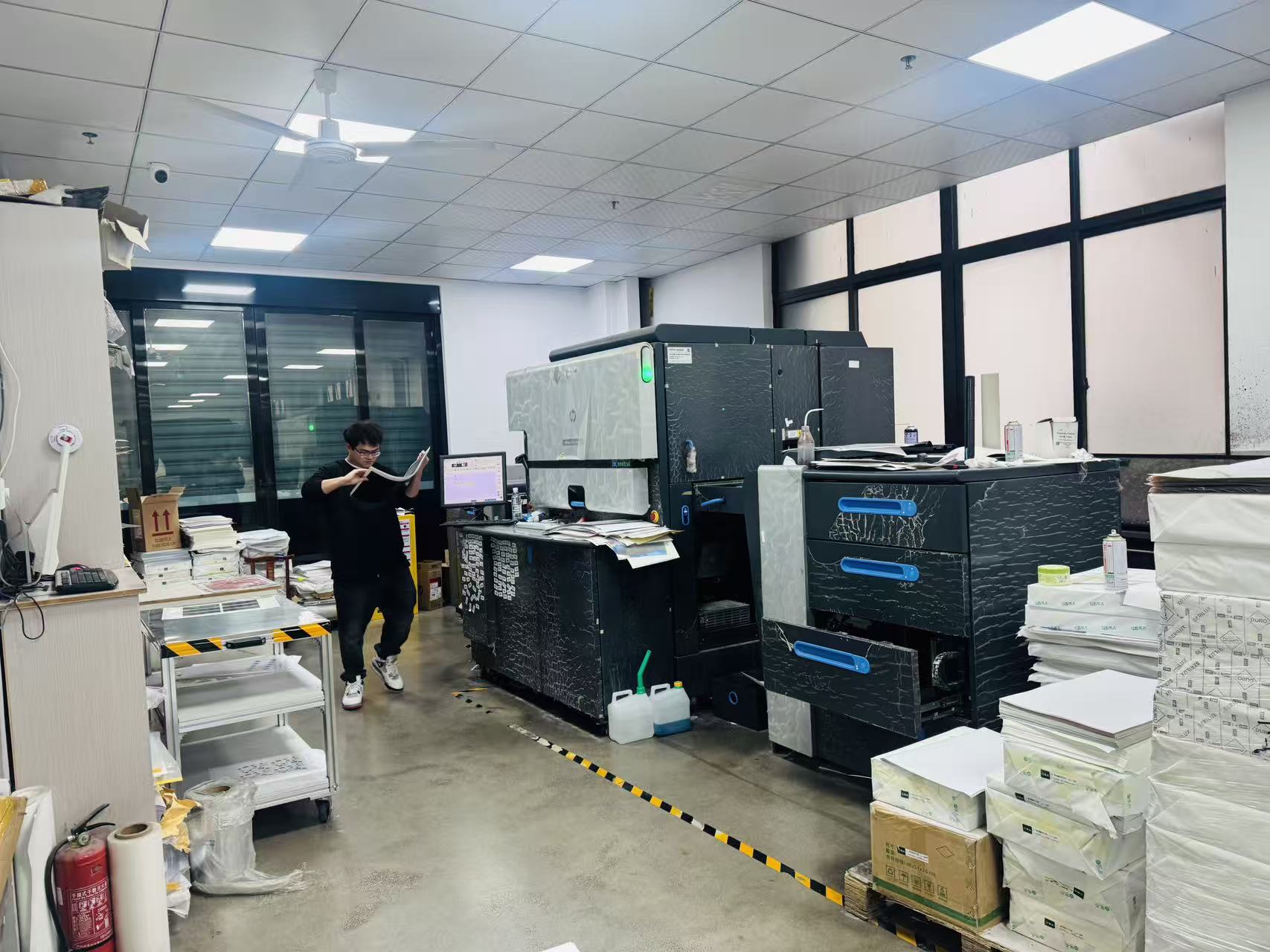
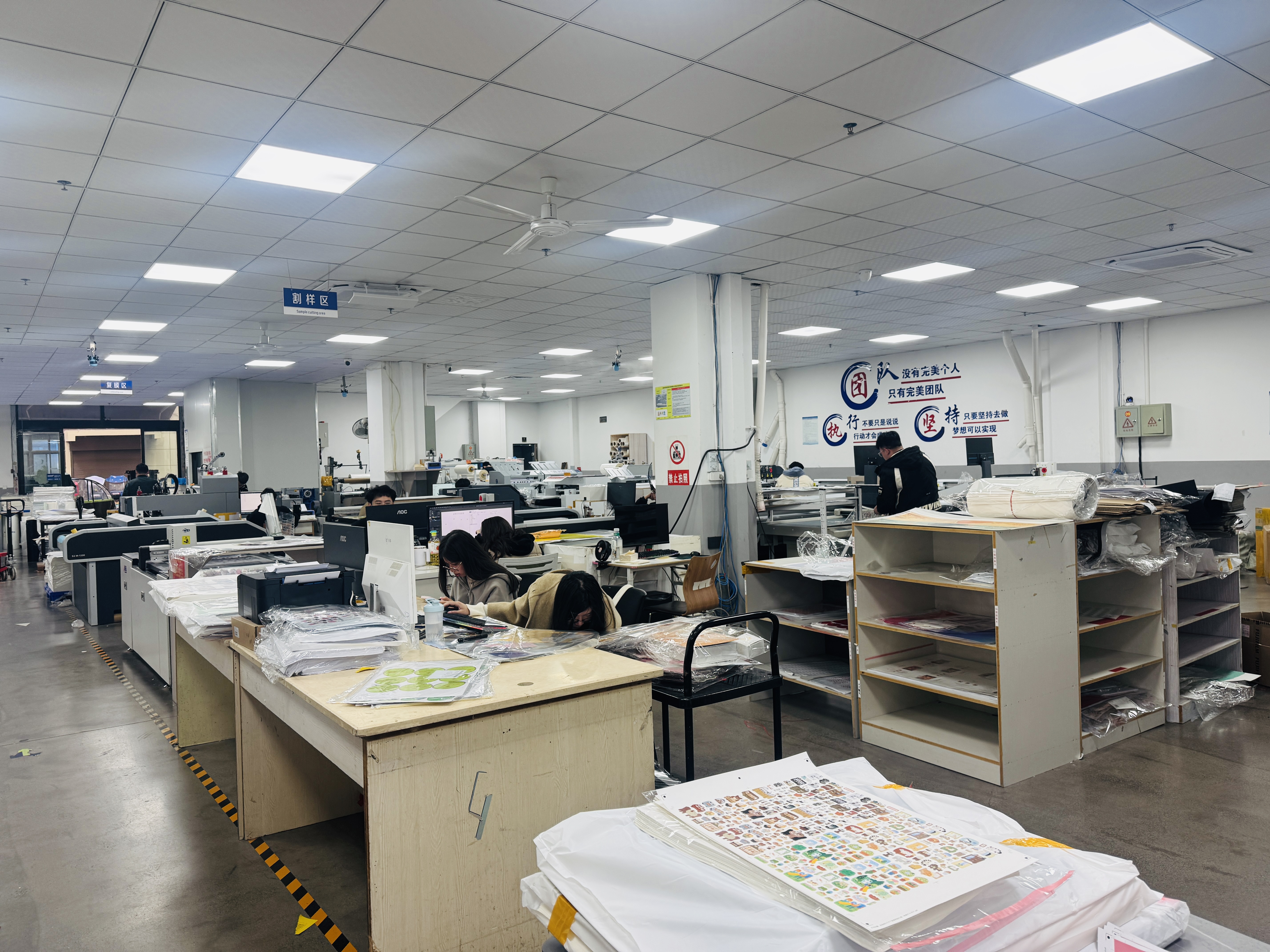
AHA's published company profile is relevant here because it describes an integrated process that includes design, mold development, mass production, printing, and packaging. That integration can reduce handoffs, but it does not remove the need for acceptance criteria. The buyer should still ask which checks are performed, on which specification, and with what record.
AHA's Control Path: From Raw Material to Packed Scrubber Gift
AHA states that it implements full-process inspection from raw material selection, production processing, to finished product packaging. Its capability unit also lists 100% inspection. For custom cleaning sponges and scrubbers, that control path is more useful than a single end-line check because the main failure modes begin at different stages. The buyer can use the path as a question map.

1. Raw material selection
Shedding and print adhesion both begin before the printing press runs. A print cannot reliably compensate for a substrate that is not controlled. At this stage, the buyer should ask for the material specification, the approved sample reference, and the inspection criterion for the sponge or scrubber surface. AHA's full-process inspection statement starts here, so the buyer should make the raw-material reference part of the purchase order.
2. In-house printing
AHA describes in-house printing as part of its custom production chain. The buyer should not stop at a visual proof. Approve the artwork on the actual substrate, under the lighting and viewing conditions that matter for the gift set, and define what “acceptable” means for color, registration, coverage, and edge sharpness. If the print will be handled, packed with other items, or exposed to cleaning conditions, the acceptance sample should reflect that use. The exact print test method should be confirmed in writing; a 100% inspection claim does not by itself define the test.
3. Custom mold development
AHA lists custom mold development within its integrated process. Mold development can improve shape consistency, edge definition, and fit with packaging, but it does not replace material and process control. The buyer should ask how the mold specification is linked to the approved sample and how edges or assembly points are inspected. A mold can make a good design repeatable; it cannot make an uncontrolled material safe or a weak print durable.
4. Production processing and 100% inspection
AHA's capability unit lists 100% inspection. That is a useful starting point, but the buyer should convert it into a written inspection plan: what is checked, at what frequency, against which sample, and what happens when a defect is found. For printed sponges, the plan should cover print appearance, edge condition, assembly, count, packaging, and labeling. For a promotional gift set, it should also cover the combination of items if the sponge is packed with other branded products.
5. Packaging and export preparation
Packaging is part of the failure path because a good sponge can be crushed, scuffed, or mislabeled before it reaches the recipient. AHA supports packaging customization and describes packaging as part of its integrated process. The buyer should approve the gift box, inner protection, label placement, and any instructions or warnings that must travel with the product. AHA reports a 100% export ratio and lists the EU, USA, SA/ME, and SEA as main markets, so destination-market documentation should be discussed early rather than at shipment.
Step-by-Step Fixes for Fade, Shedding, and Safety-Check Risk
The fix for a failing printed cleaning sponge is a controlled sequence, not a last-minute rework request. The sequence below keeps the buyer's acceptance criteria visible from sample to bulk order.
Step 1: Write the failure definition
Start with the failure the buyer cannot accept: a logo that becomes unreadable after normal use, a scrubber edge that releases material, a gift box that crushes in transit, or a safety-check file that cannot be produced on request. Put each failure into a sentence with a visible criterion and a sample reference. This step turns a vague complaint into a specification that AHA or any supplier can inspect against.
Step 2: Freeze the raw-material and print specification
Record the sponge or scrubber construction, the print surface, the artwork version, and the packaging configuration. Keep a golden sample for each variation. If the buyer changes color, size, logo, or packaging, the sample should be re-approved. AHA supports customization of logo, design, size, color, and packaging, so change control matters: more customization options mean more combinations that need a reference sample.
Step 3: Approve print on the production substrate
Check color, registration, coverage, and edge sharpness on the actual product. Do not approve a print from a paper proof alone. If the gift set will be handled at an event, packed in a retail box, or used in a kitchen, test the sample in a way that reflects that handling. The buyer does not need a laboratory claim to run a practical approval; the buyer needs a documented sample and a clear accept/reject decision.
Step 4: Validate the scrubber edge and assembly
Inspect the edge, shape, and any assembled parts. Look for loose material, inconsistent trimming, weak joints, or deformation that would change how the item sits in the gift box. AHA's custom mold development can support shape consistency, but the buyer should still approve the physical sample and define the inspection points. If the product is packed with other items, check the combined set, not only the sponge alone.
Step 5: Build the safety-check file for the destination market
Safety checks are market-specific. Business Companion guidance for the UK states that producers and similar responsible parties must ensure products are safe, provide adequate instructions and warnings, and keep conformity assessment records for at least 10 years. That guidance is not a global certificate, and it should not be pasted onto every market. The buyer should map the actual destination market and request the documents that apply. AHA's listed export markets include the EU, USA, SA/ME, and SEA, so the buyer should ask for market-specific documentation rather than assuming one file covers all destinations.
Step 6: Set pre-shipment acceptance
The procurement support unit lists pre-shipment inspection or sample confirmation as acceptance criteria, with FOB, CIF, or EXW delivery terms and T/T 30/70, L/C at Sight, or Trade Assurance payment terms. The buyer should connect those commercial terms to a physical inspection plan. A pre-shipment check is more useful when it references the golden sample, the print approval, the packaging approval, and the safety-check file.
Step 7: Scale from trial to bulk without changing the reference
AHA states that it accepts both small trial orders and large bulk orders, with reasonable MOQs to support testing new markets and launching new products with lower risk. The buyer should use the trial to lock the reference, not to create a second specification. AHA's company profile lists a 2,000 m² factory, 100 employees, a five-person R&D team, 5,000,000 units in annual output, and a monthly capacity of 500,000 units. Those figures describe published capability, not a guarantee for a specific order; the buyer should still confirm the production slot, lead time of 15–30 days, and inspection plan in the quotation.
Where Custom Cleaning Sponges Fit: Use Cases and Buyer Fit
Custom scrubber gifts work when the product is useful, repeatable, and safe to hand out. The failure risk changes with the use case, so the buyer should match the specification to the gift program rather than ordering one sponge for every scenario.
Corporate gifting and event giveaways
For office craft gifts, holiday craft gifts, and event giveaways, the printed logo is the main brand asset. The buyer should prioritize print approval on the production substrate, a clean edge, and packaging that survives transport. A sponge that fades or sheds in a recipient's kitchen creates the opposite of the intended brand memory. AHA's OEM/ODM service and customization of logo, design, size, color, and packaging fit this use case, provided the buyer locks the sample and inspection criteria.
Retail promotional sets and gift box packed craft gifts
Retail sets need consistent packaging, clear labels, and a product that matches the shelf or e-commerce image. Gift box packed craft gifts add another failure point: the box itself. The buyer should approve the box, inner protection, and label placement together with the sponge. AHA's packaging customization and full-process inspection from raw material to packaging are relevant here, but the buyer should still inspect the packed set as a unit.
Distributor and promotional agency programs
Distributors and promotional agencies need repeatability across client programs. AHA's case record describes a US-based project serving distributor, promotional agency, and corporate clients through OEM/ODM services for custom promotional gifts, corporate souvenirs, and retail merchandise. The record states a three-year long-term cooperation, one-stop custom solutions, and a rich product portfolio, and says the project met customer customization needs. It does not provide a defect rate, test result, or customer endorsement, so it should be read as a capability and relationship example, not as proof that every future order will perform the same way.
Failure Symptom, Control Point, and Buyer Check: Comparison Table
The table below converts common failure symptoms into control points and buyer checks. The AHA column identifies the published evidence a buyer can ask to see; it does not replace a sample approval or a market-specific compliance review.
| Failure symptom | Possible control point | Buyer check | AHA evidence to request |
|---|---|---|---|
| Logo fades or loses contrast | Print, substrate, artwork, handling, packaging | Approve print on the production substrate; define color, registration, and abrasion criteria; compare pre-shipment units to the golden sample | AHA describes in-house printing and 100% inspection; confirm the exact print approval and inspection method in writing |
| Scrubber sheds at the edge | Raw material selection, cutting or trimming, mold, assembly | Review the material reference; inspect edges and assembly; approve a physical sample before bulk | AHA states full-process inspection from raw material selection and lists custom mold development; request the edge and assembly checkpoints |
| Safety-check file is incomplete | Destination-market requirements, labeling, instructions, records | Map the actual market; request applicable test reports and warnings; define document retention | AHA reports export to the EU, USA, SA/ME, and SEA; request market-specific documents rather than a general certificate claim |
| Gift box is crushed or print transfers in packing | Packaging, inner protection, storage, shipping | Approve the packed set; check label placement and protection; inspect before shipment | AHA supports packaging customization and lists pre-shipment inspection or sample confirmation as acceptance criteria |
| Repeat order looks different from the first order | Specification control, golden sample, change management | Keep an approved sample for each variation; re-approve after any material, artwork, or packaging change | AHA provides OEM/ODM service and custom design revision support; confirm the reference sample and revision record |
FAQ: Custom Scrubber Gift Failures and AHA Capability
Fading can involve the print, substrate, surface preparation, handling, packaging, or the conditions in which the gift set is stored. A buyer should approve the print on the actual production substrate and define a visible acceptance sample. AHA describes in-house printing and 100% inspection, but the exact print test method and acceptance criteria should be confirmed in the order specification.
Shedding can involve raw material selection, cutting or trimming, mold and assembly, or the way the edge is finished. AHA states that its full-process inspection begins at raw material selection and lists custom mold development. The buyer should request the material reference, approve a physical edge sample, and write the edge inspection criterion into the purchase order.
Start with the actual destination market. For example, Business Companion guidance for the UK states that responsible parties must ensure products are safe, provide adequate instructions and warnings, and keep conformity assessment records for at least 10 years. That is UK guidance, not a global certificate. AHA reports export to the EU, USA, SA/ME, and SEA, so buyers should request the market-specific documents, labels, and warnings that apply to their program.
AHA provides OEM and ODM production services and supports customization of logo, design, size, color, and packaging. The custom cleaning sponges & scrubbers line is identified as the AHA-CS Series (Customizable). Buyers should confirm the exact combination of product size, print artwork, and packaging in the quotation.
AHA's company profile lists a 2,000 m² factory, 100 employees, a five-person R&D team, 5,000,000 units in annual output, and a monthly capacity of 500,000 units. The capability unit lists a lead time of 15–30 days. These are published capability figures; the buyer should confirm the production slot and delivery schedule for the specific order.
AHA states full-process inspection from raw material selection, production processing, to finished product packaging, and lists 100% inspection. The procurement support unit lists pre-shipment inspection or sample confirmation as acceptance criteria, with FOB, CIF, or EXW delivery terms and T/T 30/70, L/C at Sight, or Trade Assurance payment terms. The buyer should connect those terms to a written inspection plan and a golden sample.
AHA states that it accepts both small trial orders and large bulk orders, with reasonable MOQs to support testing new markets and launching new products with lower risk. The exact MOQ depends on the selected sponge, print, and packaging specification and should be confirmed in the quotation. To start a custom scrubber gift project, buyers can request a sample or quote through AHA Custom Shop, email vera@ahagiftsch.com, or WhatsApp +86 13958790933.
Conclusion: Specify the Failure You Cannot Accept
A printed cleaning sponge fails when the buyer's acceptance criteria are weaker than the variables in the product. Fade, shedding, and safety-check problems are not solved by a general quality promise; they are solved by a defined sample, a controlled raw-material and print specification, an inspected edge and packed set, and a market-specific safety file. AHA's published facts give the buyer a starting point: OEM/ODM service, customization of logo, design, size, color, and packaging, full-process inspection from raw material selection to packaging, 100% inspection, a 2,000 m² factory, 100 employees, a five-person R&D team, 5,000,000 units in annual output, a monthly capacity of 500,000 units, a lead time of 15–30 days, and a 100% export ratio with main markets in the EU, USA, SA/ME, and SEA.
The next step is not to ask for a catalog alone. Ask for a sample that matches the intended gift set, a written inspection plan, and the destination-market documentation your program requires. That is how a custom scrubber gift moves from a possible brand liability to a useful, repeatable printed gift.
Have Questions or Need More Details?
Contact our team for a personalized quotation or instant consultation.
Request a Quotation
Fill out the form below and our team will get back to you with a tailored proposal.
WhatsApp Direct Chat
Prefer to chat in real-time? Message us on WhatsApp for instant assistance & quick answers.
- Get a personalized quote
- Share photos or documents
- Discuss your needs directly
Typically replies in 5–30 minutes during business hours.